


By Amah Alphonsus Amaonye, Director General, African Writers Centre, AWC.
Pretoria – South Africa is confronting another grim chapter in its long-running struggle with violent crime after police discovered the body of a ninth woman in just two months in the Ekurhuleni municipality east of Johannesburg.
The latest discovery, made on Thursday, September 17, has intensified fears that a number of the killings could be connected. However, South African police have stopped short of declaring that a serial killer is responsible, saying investigators are examining all possibilities, including multiple suspects or completely separate perpetrators.
The unidentified latest victim, believed to be about 30, was found near a construction site. Police said she appeared to have suffered stab and throat wounds, although forensic investigators had yet to establish the official cause of death.
The nine bodies have been found at different locations across Ekurhuleni, including Kempton Park, Pomona, Clayville, Olifantsfontein, Rhodesfield, KwaThema and Dawn Park. Police said the victims were women in their 20s and 30s and that several were found naked or partially clothed, with some showing similar bruising.
The first body was discovered on July 17. Among the victims was 38-year-old Elizabeth “Tsontso” Moselakgomo, who disappeared while out jogging and was later found dead. Her death has particularly shocked the community because of the circumstances surrounding her disappearance.
President Cyril Ramaphosa has ordered that the investigation be treated as a priority, while a multidisciplinary police team, including specialists in complex and serial violent crime, has been deployed.
A $25,000 reward has reportedly been offered for information that can assist police in apprehending those responsible. Authorities have also warned members of the public against circulating photographs of the victims or unverified information that could intensify fear or encourage copycat crimes.
SOUTH AFRICA’S LARGER VIOLENCE PROBLEM
The latest killings cannot be viewed in isolation from South Africa’s wider struggle with violent crime and gender-based violence.
The United Nations in South Africa said this week that the killings in the eastern part of Gauteng reflect the persistent and deadly violence experienced by women and girls in the country, describing gender-based violence and femicide as manifestations of discrimination against women.
Recent crime figures cited by the Associated Press show that South Africa recorded 5,427 homicides between April and July 2026, an average of roughly 45 killings every day. AP also cited research indicating that more than 35% of South African adult women had experienced physical or sexual violence at some point.
The figures help explain why the discovery of nine women’s bodies within such a short period has generated extraordinary public anxiety.
South African women have once again been forced to confront a question that has persisted for years: How safe is a woman in a country where violent crime remains so deeply entrenched?
FROM FEMICIDE TO XENOPHOBIA AND AFROPHOBIA
But South Africa’s violence problem extends beyond gender-based violence.
The country has also experienced recurring outbreaks of xenophobic violence against African migrants, including Nigerians and other foreign nationals.
Human Rights Watch reported in May 2026 that vigilante groups had carried out violent attacks against African and Asian foreign nationals during anti-immigration protests in Johannesburg, Pretoria and Durban. The organisation said some of the violence had been fatal and accused authorities of failing, in some instances, to provide adequate protection.
The controversy has been particularly painful for Nigeria.
In September, Nigeria’s National Assembly suspended official visits to South Africa indefinitely, citing recurring violence against Nigerians and other African migrants. Nigerian authorities said citizens had been killed, injured, displaced and forced to abandon businesses, investments and property.
These developments have revived discussion about xenophobia and Afrophobia in South Africa—the hostility directed at foreigners, particularly fellow Africans, despite the continent’s shared history, borders, migration patterns and economic relationships.
But it is important not to conflate the issues.
There is currently no evidence that the nine women’s killings in Ekurhuleni are connected to xenophobic attacks or Afrophobia. The police investigation has not established such a link. The two developments should instead be understood as separate manifestations of broader public-safety and social tensions within the country.
A COUNTRY UNDER PRESSURE
The juxtaposition is nevertheless striking.
South Africa is simultaneously wrestling with femicide, violent crime, attacks on migrants, public anger over unemployment and insecurity, and growing concern about the ability of law-enforcement institutions to protect vulnerable communities.
The government has repeatedly pledged action against gender-based violence, while civil society organisations continue to demand stronger policing, faster investigations, accountability and greater protection for women.
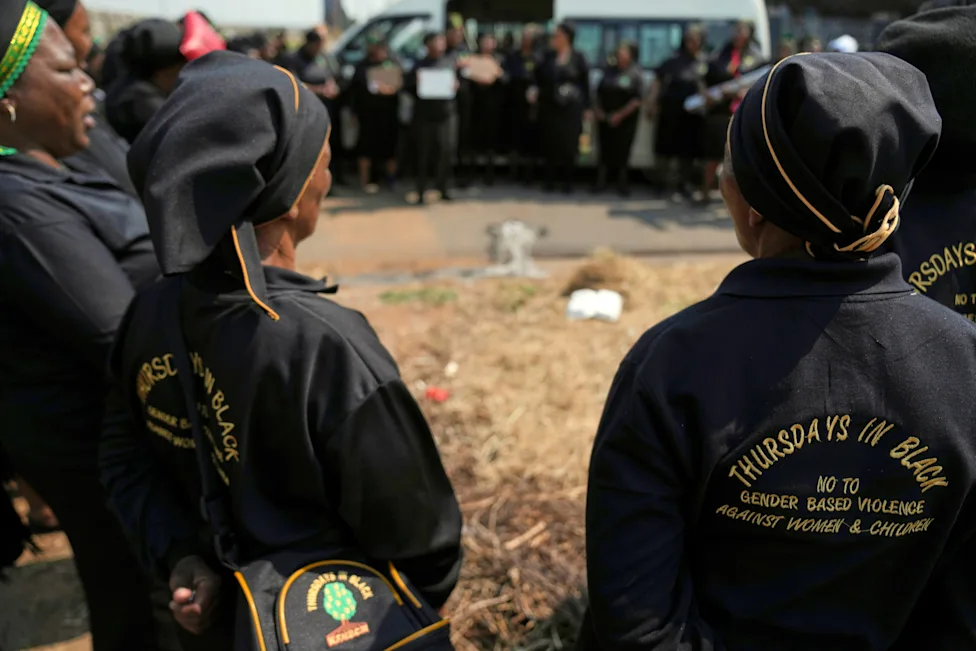
Following the latest killings, South Africans have taken to the streets in memorial events and protests. A memorial run held for Moselakgomo carried a simple message: “Enough. Stop Femicide.”
That cry goes beyond the nine victims.
It speaks to a country where women fear becoming statistics, where migrants fear becoming targets and where communities increasingly demand that the state demonstrate that law and order apply equally to everyone.
South Africa has the institutions, laws and constitutional framework to protect human dignity and equality. The challenge is translating those guarantees into everyday security.
The discovery of a ninth woman’s body is therefore more than another crime report.
It is another warning that a society cannot call itself safe when women are afraid to walk, run, travel or simply return home—and neither can a nation claim social cohesion while fellow Africans live under the shadow of xenophobic violence.
The immediate task for South Africa is clear: identify those responsible for the Ekurhuleni killings, protect women and communities, prosecute perpetrators, and confront the wider culture of violence without turning one vulnerable group against another.
From femicide or femalephobia to xenophobia, the message from South Africa’s streets is becoming impossible to ignore: violence—against women, migrants or any other vulnerable community—cannot become normal.
#SouthAfrica #Femicide #GenderBasedViolence #Xenophobia #Afrophobia


