


By Amah Alphonsus Amaonye, Director General, African Writers Centre, AWC.
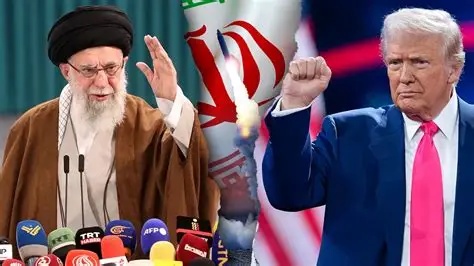
US President Donald Trump has rejected Iran’s latest proposal to reopen the strategically vital Strait of Hormuz, describing the offer as “unacceptable” and deepening uncertainty over the future of the conflict and the global energy market.
Iran had proposed a framework under which the Strait of Hormuz could be reopened within seven days, alongside a resumption of negotiations with Washington over its nuclear programme. Tehran’s proposal was reportedly conditional on the United States lifting its naval blockade of Iranian ports, easing sanctions on Iranian oil sales and observing a ceasefire that would include Lebanon. (ITV)
Trump, speaking to reporters on Saturday, rejected the proposal.
“They want to make a deal where they open the strait immediately because they’re losing so badly,” Trump said, according to reports. He added that while he was prepared to make a deal, the proposal on the table was not acceptable. (ITV)
The rejection comes after indirect US-Iranian contacts in New York during the United Nations General Assembly. Reuters reported earlier that negotiators were exploring a possible phased arrangement involving the reopening of Hormuz and an easing of the US economic blockade. (Investing.com)
HORMUZ: THE HEART OF THE BATTLE
The significance of the dispute goes far beyond Washington and Tehran.
The Strait of Hormuz is one of the world’s most important energy corridors, linking the Persian Gulf with the Gulf of Oman and the Arabian Sea. Its disruption has immediate implications for crude oil, petroleum products, LNG, shipping, insurance and global inflation.
That is why control over the waterway has become such a powerful bargaining instrument.
Iran wants relief from the economic pressure created by the US blockade and sanctions.
Washington wants unrestricted maritime access and an end to Tehran’s ability to use the waterway as leverage.
Reuters reported that the two sides have been struggling over precisely this question: neither wants to surrender its bargaining power first. (Investing.com)
WHY TRUMP’S REJECTION MATTERS
The rejection means the diplomatic opening created during the UN General Assembly has not yet produced a breakthrough.
It also leaves the international energy market facing continued uncertainty.
The Strait of Hormuz is not merely another shipping route. It is a strategic artery through which enormous quantities of energy normally move.
Consequently, every day of uncertainty around the waterway carries implications for oil prices, refinery economics, freight rates, insurance premiums and the cost of energy for consumers worldwide.
For countries such as Nigeria, the consequences are particularly important.
Nigeria is an oil-producing country, but it is also increasingly dependent on the performance of its refining sector and the international petroleum-products market. The rise of domestic refining capacity, particularly the Dangote refinery, has already altered Nigeria’s exposure to international refined-product supply disruptions.
That means the Hormuz crisis is simultaneously a threat and a test of Nigeria’s emerging energy independence.
IRAN’S CALCULATION
Iran’s offer also reveals the strategic importance Tehran attaches to the waterway.
Reuters reported that Iranian officials had proposed reopening the strait within seven days if Washington eased military pressure and lifted the blockade on Iranian ports. Tehran also linked the reopening to renewed diplomacy. (Reuters)
The proposal therefore appears designed to trade one of Iran’s most powerful strategic instruments—the Strait of Hormuz—for economic and diplomatic concessions.
Washington, however, has rejected that proposition in its present form.
That leaves the question of what comes next.
Will Tehran modify its offer?
Will Washington demand additional conditions?
Will the two sides return to indirect negotiations?
Or will the rejection lead to another escalation?
Those questions remain unanswered.
THE NIGERIAN ANGLE
For Nigeria, this is another reminder that energy security is no longer simply about how much crude a country produces.
It is about how much it can refine.
How secure its shipping routes are.
How diversified its crude markets are.
How much strategic storage it possesses.
How resilient its refineries are.
And how insulated its domestic economy is from geopolitical shocks.
This is precisely why the growth of Nigeria’s domestic refining capacity has become strategically important.
If the Hormuz confrontation continues to disrupt international petroleum flows, countries with significant refining capacity and diversified supply arrangements could have greater room to absorb the shock.
THE WORLD WATCHES HORMUZ
For now, President Trump’s rejection has left the proposed seven-day reopening plan in uncertainty.
The diplomatic door has not necessarily closed—the two sides have already demonstrated that indirect communication remains possible—but the latest development shows just how far apart Washington and Tehran remain.
The Strait of Hormuz has therefore become more than a geographical passage.
It has become a negotiating table, an economic weapon and a strategic pressure point.
And until Washington and Tehran agree on the terms governing that waterway, the consequences will extend far beyond the Middle East—to oil markets, shipping, inflation, refineries and consumers across the world.
#StraitOfHormuz #USIranConflict #GlobalEnergy #NigeriaEnergy #AWC


