


By Amah Alphonsus Amaonye
Director General, African Writers Centre (AWC)
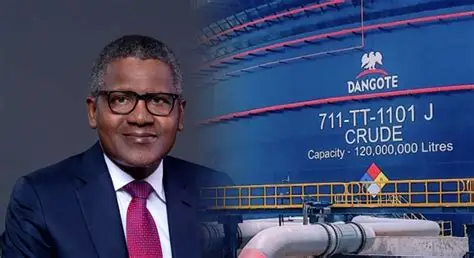
Nigeria’s capital market enters a potentially historic moment on Monday, September 14, 2026, when the long-awaited Initial Public Offering (IPO) of the Dangote Petroleum Refinery and Petrochemicals FZE opens to investors.
The offer, valued at ₦2.1525 trillion, involves up to 4.1 billion ordinary shares at ₦525 per share and will remain open until October 13, 2026. It is shaping up to be the largest IPO in African capital-market history and one of the most consequential attempts yet to bring ordinary Nigerians directly into the ownership of a major industrial asset.
But there is an important distinction: September 14 is the beginning of subscription, not the beginning of stock-market trading. The shares are expected to be listed on the Nigerian Exchange later in the year, with current expectations pointing to November, subject to completion of the allotment and listing process.
A REFINERY THAT HAS CHANGED NIGERIA’S ENERGY EQUATION
The significance of the IPO goes far beyond the stock market.
The Dangote Refinery, located in the Lekki Free Zone, has emerged as one of the world’s largest single-train petroleum refineries. The facility currently operates at approximately 700,000 barrels per day, while its owners are pursuing an additional 700,000 barrels per day of capacity, potentially taking total capacity to about 1.4 million barrels per day.
The expansion programme is estimated at approximately US$14.3 billion and is targeted for completion by 2029.
This makes the IPO, in effect, a financing mechanism for the next phase of Dangote’s energy ambition.
The prospectus says the net proceeds of the offer — approximately ₦2.111 trillion after estimated offer expenses of about ₦41.49 billion — will be committed to growth capital expenditure for the refinery expansion.
Of that amount, about ₦841 billion, or 39.8 per cent, is earmarked for utilities, offsites and associated infrastructure; ₦686.5 billion, or 32.5 per cent, for refinery process units and major equipment; and ₦583.5 billion, or 27.6 per cent, for construction, installation and other expansion works.
In other words, investors are not merely being invited to buy into an existing refinery. They are being invited to participate in financing its next major expansion.
THE NUMBERS BEHIND THE EXCITEMENT
The refinery’s financial performance provides much of the attraction.
According to the audited financial summary in the IPO prospectus, revenue rose from ₦9.38 trillion in 2024 to ₦18.74 trillion in 2025.
More dramatically, the refinery swung from a ₦723.1 billion loss after tax in 2025 to a ₦2.504 trillion profit after tax in the first six months of 2026.
For the same six months, revenue stood at ₦19.135 trillion, while gross profit reached approximately ₦3.433 trillion. In US-dollar terms, H1 2026 revenue was about $13.91 billion and profit after tax about $1.82 billion.
That turnaround is extraordinary.
But it also presents the first major question investors must ask:
How much of the current profitability is structural, and how much is a product of exceptionally favourable refining margins, crude prices, exchange-rate movements and the unusual global energy environment?
The prospectus itself warns investors that refinery revenue and profitability are principally driven by international crude prices, refined-product prices and global refining margins.
That warning is important.
A refinery can be immensely profitable in one commodity cycle and significantly less profitable in another.
₦525 PER SHARE: CHEAP OR EXPENSIVE?
At ₦525 per share, the offer is not automatically cheap simply because the Dangote name is attached to it.
The prospectus places the company’s indicative market capitalisation at approximately ₦65.22 trillion at listing, compared with about ₦63.07 trillion before the offer.
That valuation means investors are being asked to place substantial confidence in the refinery’s future earnings, expansion programme, market dominance and ability to generate sustained cash flows.
This is where the IPO becomes a serious investment story rather than simply a patriotic opportunity.
Investors should ask:
Can the refinery maintain high utilisation?
Can it consistently obtain sufficient crude feedstock at competitive prices?
Can it preserve refining margins when global markets normalise?
Can it manage the enormous capital requirements of doubling capacity?
Can it continue exporting competitively across Africa and beyond?
And perhaps most importantly:
Can the company’s future profits justify the valuation investors are being asked to accept today?
THE IPO IS DESIGNED FOR SMALL NIGERIANS TOO
One of the most politically and economically interesting features of the offer is its low entry point.
The minimum subscription is 10 shares, meaning an investor can enter at ₦5,250 at the offer price. Applications thereafter are in multiples of 10 shares.
The structure is clearly designed to widen participation.
The company has also proposed a Retail Investor Incentive Programme under which an eligible retail investor who subscribes and maintains at least the minimum holding continuously for 12 months could receive one additional share at no cost, with another incentive share potentially available after another 12 months. The programme remains subject to the required regulatory and corporate approvals.
This is significant.
For decades, Nigerians have largely experienced major corporations as customers rather than owners.
Dangote’s IPO is attempting to reverse that relationship:
the person who buys the petrol can potentially become a shareholder in the company that produces it.
That is a powerful idea for financial inclusion and the democratisation of ownership.
BUT INVESTORS MUST NOT CONFUSE PATRIOTISM WITH INVESTMENT ANALYSIS
There is an understandable emotional attraction to the IPO.
The refinery is Nigerian. It has reduced the country’s dependence on imported refined petroleum products. It has created a major industrial platform. It has begun exporting refined products. And its expansion could further strengthen Nigeria’s position in the African downstream petroleum market.
But none of those facts guarantees that an investor will make money from buying the shares.
The prospectus itself makes this clear.
There is no guarantee of capital appreciation, income or dividend payment. The market price after listing will be determined by supply and demand and may fall below the ₦525 offer price.
There is also no guarantee that an investor will receive every share applied for if the offer is oversubscribed. The company reserves the right to scale back allocations in accordance with the approved basis of allotment.
Therefore, Nigerians should resist the temptation to borrow money simply because the IPO is being presented as a once-in-a-generation opportunity.
An IPO is an investment, not a national donation.
THE BIGGEST RISKS
The prospectus identifies a number of risks that investors should take seriously.
First is commodity-price risk. Refining margins can change dramatically with global oil and petroleum-product prices.
Second is feedstock risk. The refinery requires enormous quantities of crude oil. Its profitability therefore depends partly on securing adequate crude at competitive prices.
Third is operational risk. Maintaining a complex integrated refinery at high utilisation requires reliable process units, utilities, marine infrastructure, logistics and technical personnel.
Fourth is debt and financing risk. The prospectus says the company has substantial existing indebtedness, although its net-debt-to-EBITDA ratio was reported at only 0.27 times as of June 30, 2026.
Fifth is foreign-exchange risk. The company’s functional and reporting currency is the US dollar, and substantial portions of its revenues, crude costs, financing and capital expenditure are dollar-denominated or dollar-linked.
Sixth is regulatory and policy risk, particularly concerning petroleum pricing, imports, exports, taxation and the regulatory framework governing free-zone operations.
And seventh is market risk: after listing, there is no guarantee that a deep and liquid market will immediately develop for the shares.
THE DIVIDEND QUESTION
For income investors, another issue deserves attention.
The company says it intends to adopt a dividend policy that balances shareholder distributions with reinvestment in operations and long-term growth.
It intends, subject to applicable laws and requirements, to declare dividends in US dollars, although payments could ultimately be made in dollars, naira or another permitted currency. Dividend payments will depend on distributable profits, cash flow, financial position, financing restrictions and board approval.
That means investors should not buy the shares assuming a guaranteed dollar dividend.
The prospectus makes the intention clear, but intention is not the same thing as a guaranteed distribution.
THE FOREIGN INVESTOR DIMENSION
The offer also has an international dimension.
A Mauritius-based Pan-African Refinery Investment SPV has committed to subscribe for up to the naira equivalent of US$400 million, representing approximately 25.34 per cent of the offer if fully taken up, subject to the applicable allotment process and regulatory approval.
This suggests that international institutional capital is already taking an interest in the refinery’s future.
It also reinforces the broader ambition behind the transaction: Dangote is attempting to transform the refinery from a monumental Nigerian industrial project into a major African energy platform.
WHAT THIS MEANS FOR NIGERIA’S CAPITAL MARKET
The IPO could have an impact far beyond Dangote.
A successful ₦2.15 trillion offer would inject one of Africa’s largest industrial assets into the Nigerian Exchange and potentially deepen the country’s equity market.
It could attract millions of new retail investors, increase market participation and encourage Nigerians who have traditionally kept savings outside the capital market to begin thinking about equities as a long-term wealth-building instrument.
It could also set a precedent.
If Nigerians embrace the Dangote offer and subsequently benefit from transparent reporting, dividends and market liquidity, other large privately held Nigerian companies may become more willing to list.
That could gradually change the character of Nigeria’s capital market from one dominated by a relatively small pool of listed corporations into a deeper marketplace for indigenous industrial ownership.
AWC ANALYSIS: THE REAL TEST BEGINS AFTER THE IPO
For the African Writers Centre, the greatest significance of the Dangote IPO is not simply how much money is raised tomorrow.
The bigger question is what happens after Nigerians become shareholders.
Public ownership must come with public accountability.
Once the company enters the listed market, Nigerians will expect timely financial reporting, stronger corporate governance, transparency in related-party transactions, clear dividend policies and credible communication with shareholders.
Investors will also want to know whether the promised expansion is delivered on time and within budget.
The refinery has already demonstrated that Nigeria can build a world-scale industrial asset.
The next challenge is demonstrating that such an asset can be transformed into a world-class publicly accountable corporation.
That is the real test.
TOMORROW’S MESSAGE
When the IPO opens on Monday, thousands — potentially millions — of Nigerians will face a simple question:
Do I want to remain only a consumer of Dangote’s petroleum products, or do I want to become a small owner of the enterprise behind them?
There is no universal answer.
For some, ₦5,250 may be a modest long-term investment.
For others, the better decision may be to wait, study the prospectus, examine the company’s financials and observe how the shares behave after listing.
The important thing is that Nigerians should make the decision with information rather than excitement, analysis rather than emotion, and patience rather than the expectation of instant wealth.
The Dangote Refinery IPO may become a landmark in Nigeria’s economic history.
But its true legacy will not be measured merely by the amount raised on the opening day.
It will be measured by whether millions of Nigerians who enter as shareholders eventually feel that they have genuinely become participants in the country’s industrial future.
By Amah Alphonsus Amaonye
Director General, African Writers Centre (AWC)
#DangoteIPO #DangoteRefinery #NGX #NigeriaCapitalMarket #AWC


