


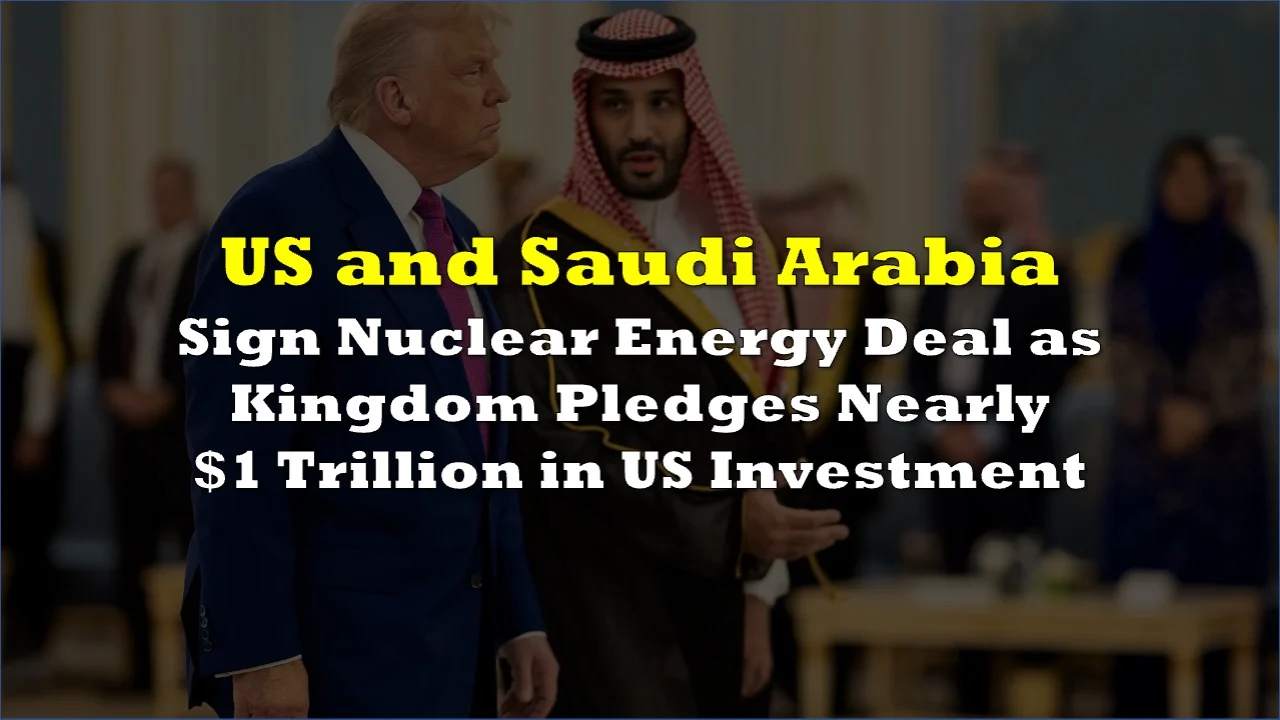
…As US-Saudi Arabia sign landmark nuclear energy deal, Riyadh moves toward civilian atomic power programme
Washington/Riyadh — As the war between US-Israel and Iran rages to stop Iran’s nuclear programme, the United States and Saudi Arabia have signed a landmark civil nuclear cooperation agreement that opens the way for a multi-billion-dollar partnership aimed at developing Saudi Arabia’s nuclear energy sector, marking a major step in the Kingdom’s ambition to diversify its energy sources beyond oil.
The agreement, commonly known as a “123 Agreement” under the U.S. Atomic Energy Act, was signed by U.S. Energy Secretary Chris Wright and Saudi Energy Minister Prince Abdulaziz bin Salman. It establishes the legal framework for long-term cooperation between both countries in nuclear energy development, including the potential construction of nuclear reactors and participation of American nuclear technology companies in Saudi Arabia’s emerging nuclear industry.
Saudi Arabia’s Nuclear Ambition
The deal represents a significant milestone in Saudi Arabia’s Vision 2030 strategy, which seeks to transform the Kingdom’s economy, reduce dependence on crude oil revenues and expand investment in advanced technologies.
Saudi Arabia has long expressed interest in developing nuclear power to meet rising electricity demand, preserve more oil and gas for export, and establish itself as a regional hub for advanced energy technologies.
The agreement could allow U.S. companies, including major nuclear technology firms such as Westinghouse, to participate in the design, supply and construction of nuclear facilities in the Kingdom. The project is expected to create opportunities worth tens of billions of dollars across engineering, construction, technology and energy supply chains.
Nuclear Safety and Non-Proliferation Concerns
While American and Saudi officials have described the agreement as focused on peaceful civilian nuclear energy, the deal has attracted international attention because it leaves open discussions around Saudi Arabia’s ability to develop domestic uranium enrichment capabilities.
Uranium enrichment is a sensitive nuclear technology because, although it can support civilian nuclear power generation, highly enriched uranium can also be used in nuclear weapons programmes if diverted.
Non-proliferation experts and some lawmakers have raised concerns that allowing enrichment capability in Saudi Arabia could create new strategic risks in the Middle East, particularly amid existing regional tensions involving Iran’s nuclear programme.
Critics have argued that the agreement does not contain some of the strictest safeguards previously demanded in nuclear cooperation agreements, including the so-called “gold standard” restrictions that prevent domestic enrichment and require stronger international monitoring.
US Strategic and Economic Interests
For Washington, the agreement strengthens a decades-old strategic relationship with Riyadh while giving American nuclear companies greater access to a potentially lucrative market.
The U.S. government said the partnership would promote American jobs, strengthen energy cooperation and ensure that Saudi Arabia’s nuclear development follows international safety and security standards.
The agreement also comes amid wider efforts by the United States to maintain influence in the Middle East’s energy and technology sectors, competing with countries such as China and Russia, which have also sought major infrastructure and energy partnerships in the region.
Congressional Review Ahead
The agreement is expected to undergo review by the U.S. Congress before it becomes fully operational. Under American law, nuclear cooperation agreements require congressional oversight, giving lawmakers an opportunity to examine the safeguards, security implications and long-term consequences of the partnership.
Regional Implications
The agreement has significant geopolitical implications. Saudi Arabia’s nuclear ambitions have been closely watched because of the broader strategic competition between Riyadh and Tehran.
Saudi leaders have previously indicated that they would consider developing nuclear capabilities if Iran obtained nuclear weapons, raising concerns among analysts that nuclear technology could intensify competition in the Middle East.
However, supporters of the agreement argue that responsible civilian nuclear development can help meet energy needs, support economic diversification and encourage greater cooperation in a region facing growing energy and security challenges.
A New Chapter in Global Energy Politics
The US-Saudi nuclear agreement represents one of the most consequential energy partnerships in recent years, combining economic opportunity, technological advancement and strategic diplomacy.
While Saudi Arabia sees nuclear energy as a pathway toward a diversified future, the international community will closely monitor how the programme develops, particularly regarding transparency, safety and non-proliferation commitments.
The success of the agreement may ultimately depend on whether it can balance Saudi Arabia’s energy ambitions with global concerns about nuclear security.
#USSaudiRelations #NuclearEnergy #SaudiVision2030 #GlobalEnergy #MiddleEastPolitics


