


By Amah Alphonsus Amaonye, Director General, African Writers Centre, AWC
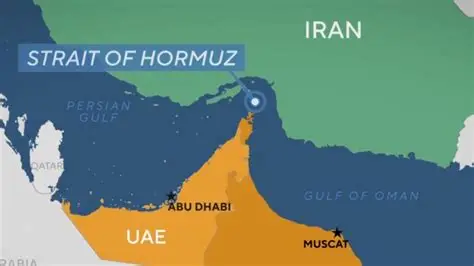
The escalating crisis around the Strait of Hormuz has delivered a powerful warning to Nigeria: an oil-producing nation cannot afford to leave its domestic energy logistics and petroleum pricing excessively exposed to geopolitical events thousands of kilometres away.
The warning is particularly urgent as oil transportation through the strategic Strait of Hormuz has suffered an extraordinary collapse.
According to the U.S. Energy Information Administration (EIA), an average of 21.6 million barrels per day of crude oil and petroleum liquids passed through the Strait of Hormuz in the fourth quarter of 2025, before the current conflict. By the second quarter of 2026, the flow had fallen to just 4.9 million barrels per day.
That represents a reduction of almost 77 per cent.
The significance cannot be overstated. Hormuz is one of the world’s most important energy chokepoints, connecting the Persian Gulf’s major oil-producing states to international markets. Before the conflict, roughly one-fifth of global oil supplies moved through the waterway.
And now, the disruption is no longer merely a Middle Eastern problem.
It is a global logistics problem, a global inflation problem and, potentially, a Nigerian household problem.
NIGERIA CANNOT PRETEND TO BE IMMUNE
Nigeria is an oil-producing country. It should therefore possess significant natural insulation against an international oil-supply shock.
But producing crude oil does not automatically mean possessing energy security.
The real question is:
Can Nigeria continue to supply petrol, diesel, aviation fuel and other petroleum products to its citizens at reasonably predictable prices when a geopolitical crisis disrupts one of the world’s principal oil arteries?
The answer depends increasingly on the country’s domestic refining capacity, crude-oil supply arrangements, petroleum-product distribution network, storage infrastructure, pipelines, marine logistics and pricing policy.
There has been substantial progress.
The Dangote Petroleum Refinery, now operating at a capacity of up to 700,000 barrels per day, has significantly altered Nigeria’s petroleum-product landscape. EIA data show that Nigeria’s seaborne imports of petroleum products fell from almost 400,000 barrels per day in 2023 to below 130,000 b/d in the second quarter of 2026, while shipments of petroleum products within Nigeria increased sharply.
That is a major strategic development.
But it is not yet sufficient to declare Nigeria insulated from the global oil shock.
THE DANGOTE FACTOR — AND THE VULNERABILITY
Dangote is providing Nigeria with an important strategic buffer.
EIA says intra-Nigerian petroleum-product shipments rose to approximately 211,000 barrels per day in Q2 2026, compared with 81,000 b/d in 2025 and only 33,000 b/d in 2023.
The refinery is therefore increasingly becoming a national energy-security asset.
But there is a contradiction.
Reuters reported in July that Dangote began pricing some local fuel sales in U.S. dollars, citing difficulties securing sufficient Nigerian crude under the naira-for-crude arrangement and the increasing cost of sourcing additional crude internationally. The refinery requires substantially more crude cargoes than it has been receiving locally and has therefore had to supplement domestic supplies with international purchases.
This exposes an important weakness in Nigeria’s energy architecture:
The refinery may be physically located in Nigeria, but its economics remain connected to the international oil market.
If international crude prices rise sharply because Hormuz is disrupted, the cost of crude supplied to Nigerian refineries can rise.
If freight and marine-insurance costs rise, the cost of moving crude and petroleum products can rise.
If the naira weakens against the dollar, the domestic cost of internationally priced crude and equipment can rise.
And if global petroleum-product prices rise, marketers can face higher replacement costs even when the product is refined domestically.
Therefore, local refining does not automatically mean local price immunity.
THE LATEST WARNING IS ALREADY HERE
The global market is already responding.
Brent crude settled at about $104.61 per barrel on Friday, September 11, after gaining more than 8 per cent over the week as supply risks intensified. Reuters attributed the price pressure to disruptions involving Hormuz, attacks on tankers and threats to other energy infrastructure.
And the pressure is beginning to transmit into Nigeria’s downstream market.
Reports on Saturday, September 12, said Dangote Refinery had raised its petrol gantry price to ₦1,350 per litre, citing rising global crude prices amid the Middle East crisis.
Whether every subsequent movement in Nigerian pump prices can be attributed directly to Hormuz is another matter. Domestic crude availability, exchange rates, taxes, logistics, margins and market competition also matter.
But the principle is unmistakable:
Nigeria’s domestic petroleum market is still exposed to international energy-price movements.
THE BIGGER DANGER: LOGISTICS
This is where Nigeria needs to think beyond the price of petrol.
Oil security is fundamentally a logistics-security issue.
A refinery can produce fuel, but the fuel must get to where Nigerians need it.
Nigeria therefore needs sufficient:
- coastal petroleum-product terminals;
- inland depots;
- functional pipelines;
- tanker fleets;
- rail-linked fuel logistics;
- strategic storage;
- reliable port infrastructure;
- marine transport capacity;
- emergency distribution corridors; and
- regional stockpiles.
Without these, a disruption in one part of the international supply chain can quickly become a domestic distribution crisis.
Nigeria has already experienced the consequences of weak petroleum logistics through fuel queues, tanker congestion, pipeline failures, port bottlenecks and regional disparities in product availability.
The lesson from Hormuz is that energy security cannot be reduced to having crude oil underground or a refinery on the coastline.
It requires an entire logistics ecosystem.
HORMUZ IS NOT THE ONLY CHOKEPOINT AT RISK
The situation has become even more complicated.
The Bab el-Mandeb Strait, another strategic maritime chokepoint connecting the Red Sea to the Gulf of Aden, is also facing heightened security risks.
Iran-aligned Houthi forces have recently advanced in Yemen, including the reported capture of the strategically located Perim Island. That has increased concern about shipping through another vital energy and commercial corridor.
Saudi Arabia has also temporarily shut its 1,200-kilometre East-West oil pipeline after an aerial attack. The pipeline had been moving approximately 4–5 million barrels of oil per day, providing an alternative route around Hormuz.
This is the nightmare scenario for global energy logistics:
Hormuz becomes constrained, while alternative routes simultaneously become vulnerable.
That is precisely why Nigeria must not wait for the crisis to become a domestic fuel emergency before acting.
THE MONDAY DIPLOMATIC INITIATIVE
Against this increasingly dangerous background, Iran says it will meet Gulf countries in Salalah, Oman, on Monday, September 14, 2026, to discuss the future of the Strait of Hormuz.
Iranian Foreign Ministry spokesman Esmail Baghaei said the meeting is intended to “promote better understanding among the countries of the region” and strengthen shared regional security. Iraq and Gulf littoral states are expected to participate.
The meeting is particularly significant because it represents an attempt to bring the countries directly surrounding the Gulf into discussions about the future of the waterway.
Financial Times reports that the talks are aimed at securing regional support for a temporary arrangement governing commercial shipping through Hormuz.
However, expectations should remain cautious.
Reuters reported on Saturday that a senior Iranian official did not expect the Monday meeting to produce a signed Hormuz agreement. Iran is seeking an arrangement that would give it a role in controlling passage and potentially collecting fees from vessels using the waterway — a proposition opposed by Oman.
And there is an important correction to some reports circulating about attendance:
Oman is hosting the meeting; it is not refusing to attend. Bahrain has said it will not participate in meetings with Iran.
Iranian President Masoud Pezeshkian has meanwhile claimed that Arab foreign ministers would meet in Muscat to sign an agreement establishing a joint Iran-Oman shipping route and notify the International Maritime Organization. That claim is more ambitious than the cautious account reported by Reuters, meaning the precise outcome of Monday’s meeting remains uncertain.
WHAT SHOULD NIGERIA BE DOING NOW?
Nigeria should treat the Hormuz crisis as an energy-security stress test.
1. Build strategic petroleum reserves
Nigeria needs a credible national strategic petroleum reserve capable of cushioning temporary international supply and price shocks.
A country that produces crude oil but has no meaningful emergency stockpile of refined products remains vulnerable.
2. Guarantee crude supply to domestic refineries
The Federal Government must ensure that Nigerian refineries receive sufficient domestic crude under transparent and commercially sustainable arrangements.
Reuters reports that Dangote has secured about 16 million barrels of Nigerian crude for October, equivalent to roughly 520,000 b/d, alongside some imported crude.
This demonstrates both progress and the scale of the challenge.
Nigeria should be asking:
Why should an oil-producing country with a 700,000-b/d refinery operating at scale need to depend heavily on international crude cargoes when geopolitical tensions are threatening global supply?
3. Develop a national petroleum logistics grid
Nigeria needs a properly integrated system connecting:
refineries → coastal terminals → depots → pipelines → rail → tank farms → road distribution → retail outlets.
The country should stop treating these as isolated infrastructure projects.
They constitute one national energy-security chain.
4. Protect maritime infrastructure
Nigeria’s ports and offshore facilities must be protected against disruption.
The country should also strengthen maritime domain awareness, tanker tracking, emergency response and coordination between the Nigerian Navy, NIMASA, Nigerian Ports Authority and other relevant agencies.
5. Reduce unnecessary exposure to international freight
Where petroleum products are refined locally, Nigeria should maximise domestic distribution and storage rather than unnecessarily recreating dependence on international shipping.
The EIA data already show that greater domestic product shipments have helped reduce reliance on imports.
6. Create a transparent domestic pricing buffer
Nigeria cannot completely disconnect its petroleum prices from the international market.
But government can design policies that prevent every short-term international shock from producing an immediate and disproportionate domestic price shock.
That requires transparent rules around crude allocation, refinery pricing, exchange rates, freight, taxes, margins and strategic reserves.
7. Keep Nigeria’s refineries operational
Dangote is important, but national energy security cannot depend on one private refinery.
The rehabilitation and reliable operation of the Port Harcourt, Warri and Kaduna refinery systems should remain part of a broader national strategy, provided the facilities can operate commercially and efficiently.
The objective should be redundancy.
One refinery should never become Nigeria’s only meaningful line of defence.
THE PRICE QUESTION CANNOT BE IGNORED
There is an uncomfortable reality Nigeria must confront.
When international crude prices rise, an oil-producing country may actually earn more foreign exchange from crude exports.
But Nigerian consumers can simultaneously suffer higher petrol, diesel, aviation-fuel, transport and food prices.
That is because Nigeria’s economy is not only an oil producer; it is also a major consumer of petroleum products.
Therefore, Nigeria can potentially be a financial beneficiary of high oil prices at the government/export level while households become victims of those same prices at the consumption level.
That contradiction requires deliberate policy.
The goal should be to capture the benefits of higher oil revenues while shielding vulnerable households and productive sectors from excessive energy-price volatility.
AWC: HORMUZ MUST BECOME NIGERIA’S ENERGY-SECURITY WAKE-UP CALL
The African Writers Centre believes the Strait of Hormuz crisis should be treated as a strategic warning rather than simply another international news story.
Nigeria cannot control Iran.
It cannot control the United States.
It cannot control the Gulf states.
It cannot determine what happens to tankers in the Persian Gulf.
But Nigeria can control how vulnerable its own economy is to those events.
The country possesses crude oil, expanding refining capacity, a large consumer market, significant maritime assets and enormous human resources.
What it needs is strategic coordination.
The Federal Government should therefore urgently convene the relevant energy, finance, transport, maritime, security and downstream agencies to conduct a National Petroleum Supply Resilience Review.
The question should be simple:
If Hormuz remains severely restricted for another six months, can Nigeria guarantee adequate petrol, diesel, aviation fuel and other essential petroleum products across the country without an uncontrolled price shock?
If the answer is not an unequivocal yes, then the country has work to do.
The present crisis offers Nigeria an opportunity to move from a reactive petroleum policy to a genuine national energy-security strategy.
Because the lesson of Hormuz is bigger than oil.
It is about logistics.
It is about sovereignty.
It is about resilience.
And ultimately, it is about whether an oil-producing nation can protect its citizens from a crisis occurring on the other side of the world.
#AWCNews #StraitOfHormuz #Nigeria #EnergySecurity #OilLogistics


