


By Amah Alphonsus Amaonye, Director General, African Writers Centre, AWC.
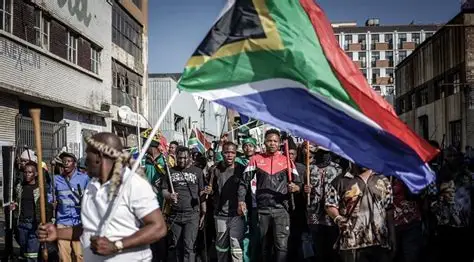
Tensions between South Africa and Nigeria are rising again after anti-immigration protesters in South Africa issued a fresh deadline demanding that undocumented migrants leave the country by September 30, 2026.
The ultimatum, issued by activists associated with the March and March movement, is not a government order and carries no legal force. However, it has raised fears of renewed demonstrations and possible confrontation as the deadline approaches.
The latest development comes only months after protesters set an earlier June 30 deadline for undocumented foreign nationals to leave South Africa. That deadline passed without the mass expulsion threatened by activists, although anti-immigrant protests and enforcement operations have continued.
March and March leader Sphelele Shinga has warned of a much larger mobilisation on September 30, with activists claiming that as many as 1.5 million people could participate. The movement says its campaign is driven by concerns over illegal immigration, employment, crime and pressure on public services.
The renewed campaign is having particularly serious consequences for Nigerians, who constitute one of the prominent foreign communities affected by the unrest.
According to CNN reporting, some Nigerians have begun leaving South Africa again, while others have closed businesses, sought safety around the Nigerian diplomatic mission or kept their children away from school amid concerns over their security.
The situation has already spilled into diplomatic relations.
Nigeria announced the suspension of official visits to South Africa amid the anti-migrant violence, while Nigerian authorities have expressed concern over the safety of their nationals. Nigeria has also previously arranged voluntary repatriation flights for citizens affected by the unrest, with more than 1,400 Nigerians reportedly returning home during the earlier wave of violence.
The South African government, however, has drawn a clear distinction between enforcing immigration laws and targeting foreigners.
President Cyril Ramaphosa acknowledged widespread concerns among South Africans about irregular migration, jobs, public services, borders and security. His administration subsequently introduced a multi-point strategy that includes stronger immigration enforcement and deportation of undocumented foreigners.
At the same time, the South African government has warned that vigilantism, looting, violence and targeting people because of their nationality are criminal acts and will be dealt with under the law.
That distinction is now at the heart of the unfolding crisis: South Africa has the sovereign right to enforce its immigration laws, but protesters do not have the legal authority to deport people or impose their own deadlines on foreign nationals.
For Nigeria, the stakes are considerably higher than an ordinary diplomatic disagreement.
South Africa remains one of Nigeria’s most important economic and diplomatic partners on the continent, while thousands of Nigerians live, work, study and operate businesses there. Any prolonged escalation could therefore affect not only the welfare of Nigerian nationals but also trade, investment, aviation, tourism and wider African diplomatic relations.
The September 30 deadline has consequently become a test of whether South Africa can manage legitimate concerns over irregular migration while preventing mob action and xenophobic violence.
As the date approaches, attention will increasingly turn to the South African government, police and diplomatic authorities to ensure that immigration enforcement remains a matter for the state and the courts—not street groups.
The message from the streets may be loud, but the law remains the decisive authority.
#SouthAfrica #Nigeria #MigrantCrisis #Xenophobia #Africa


