


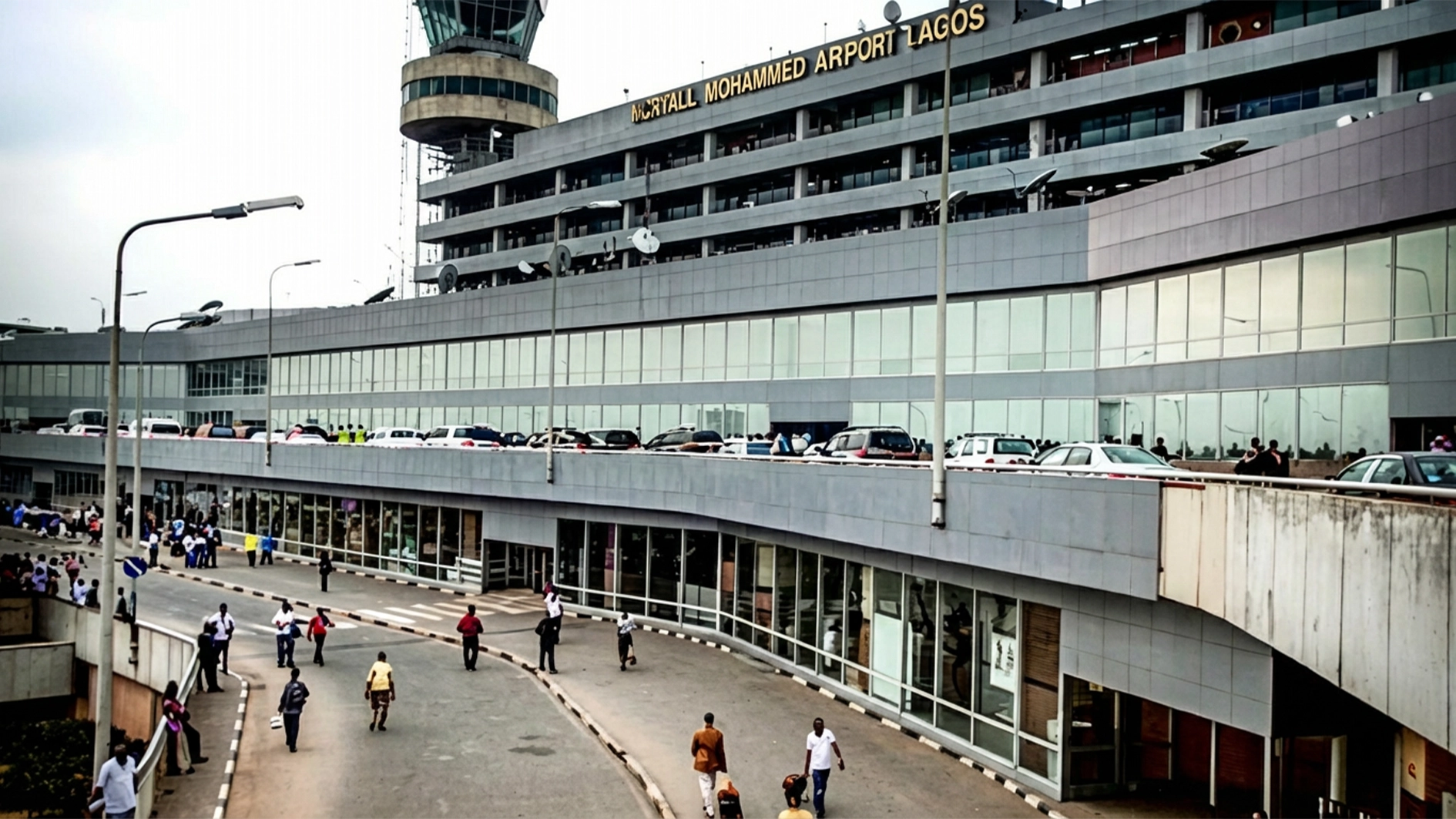
…IATA raises fresh alarm over taxes, charges, fuel and operating costs as Nigeria struggles to build a globally competitive airline industry
By Amah Alphonsus Amaonye,
Director General, African Writers Centre (AWC)
Nigeria’s aviation industry is facing a problem that goes beyond the survival of individual airlines: the cost of doing business is becoming a structural threat to the entire air transport ecosystem.
The International Air Transport Association (IATA) has repeatedly identified Nigeria as one of the world’s most expensive environments in which to operate an airline, with the association warning that the country’s high operating costs are undermining the competitiveness, profitability and growth of domestic carriers.
Speaking at the IATA Annual General Meeting in Rio de Janeiro in June 2026, Kamil Al-Awadhi, IATA’s Regional Vice President for Africa and the Middle East, acknowledged ongoing efforts by Nigeria’s aviation authorities but said the country’s airlines continued to face severe cost pressures.
Al-Awadhi is not an outsider making a casual observation. He is IATA’s regional executive responsible for more than 60 countries across Africa and the Middle East, with a mandate that includes advocating for lower airline costs and improved connectivity.
THE NIGERIAN PARADOX
Nigeria has enormous aviation potential.
With more than 200 million people, major commercial centres in Lagos, Abuja, Port Harcourt, Kano and elsewhere, a large travelling population, significant business activity and a strategic position between West Africa, Europe and the wider African market, Nigeria should have the foundations for a much stronger domestic and regional aviation industry.
Yet the industry continues to struggle with multiple taxes and charges, expensive aviation fuel, foreign-exchange pressures, infrastructure costs, regulatory charges and other operational burdens.
Recent Nigerian industry reporting puts the number of taxes, fees and charges confronting domestic airlines at as many as 54, spread across government agencies and other aviation-related institutions.
The consequences are eventually felt by the passenger.
Every additional cost imposed on an airline has the potential to find its way into ticket prices, making air travel more expensive, reducing demand and putting further pressure on already fragile airline balance sheets.
It creates a vicious circle:
High costs → high fares → lower demand → weaker airline revenues → reduced capacity → higher unit costs.
AFGHANISTAN COMPARISON NEEDS CONTEXT
The viral claim circulating online says IATA has placed Nigeria alongside Afghanistan as the world’s worst locations for airline operations.
That formulation requires caution.
The sources reviewed do support IATA’s unusually strong criticism of Nigeria’s cost environment, but they do not establish a formal IATA global ranking declaring Nigeria and Afghanistan the two worst countries for airlines.
The comparison is therefore better understood as a description of radically different aviation challenges, rather than a formal league table.
Afghanistan’s aviation difficulties are principally associated with political, security and infrastructure circumstances, while Nigeria’s problem, as repeatedly highlighted by IATA, is substantially about the economic and regulatory burden placed on airlines operating in the country.
That distinction matters.
Nigeria is not Afghanistan.
Nigeria has an established civil aviation system, functioning airports, domestic and international airlines, aviation regulators and a large commercial market.
Its problem is that the cost of operating within that system remains exceptionally high.
54 CHARGES: A WARNING FOR GOVERNMENT
The reported 54 taxes, fees and charges have become one of the most controversial issues in the Nigerian aviation sector.
Industry representatives say the charges originate from several government institutions and are ultimately reflected in the economics of airline operations and passenger fares.
For airlines already battling the cost of Jet A1, aircraft leasing, maintenance, insurance, foreign exchange and spare parts, the cumulative effect can be severe.
And aviation is unusually sensitive to cost.
An aircraft cannot simply remain idle indefinitely. It has to fly enough sectors, carry enough passengers and generate enough revenue to cover enormous fixed and variable expenses.
When those calculations no longer work, airlines reduce routes, ground aircraft or disappear altogether.
THE AIRLINE MORTALITY QUESTION
Nigeria’s aviation history is littered with airlines that started operations with ambitious plans but eventually disappeared.
That history has generated a recurring question:
Why has Nigeria struggled to build a large, sustainable indigenous airline industry despite having one of Africa’s biggest economies and populations?
The answer cannot be reduced to taxation alone.
Weak capitalisation, corporate governance problems, foreign-exchange instability, expensive maintenance, inadequate infrastructure, fluctuating passenger demand and regulatory issues have all featured in industry debates.
But IATA’s continuing warning places the cost of the operating environment firmly at the centre of the conversation.
IATA ALSO ACKNOWLEDGES PROGRESS
The picture is not entirely negative.
IATA has acknowledged reforms and efforts by Nigeria’s aviation authorities, including those under Aviation and Aerospace Development Minister Festus Keyamo.
At its June 2026 AGM, IATA’s Africa and Middle East briefing identified high costs, blocked airline funds, safety, regional harmonisation and capacity building among the major priorities confronting African aviation.
And in September 2026, Al-Awadhi again warned that African airlines generally face unusually high costs. He said African unit costs are roughly twice the global average, while taxes and charges are at least 15% above the global average and aviation fuel is significantly more expensive than the global norm.
This makes Nigeria’s challenge part of a broader African aviation problem, even though the Nigerian market has its own peculiarities.
WHAT SHOULD NIGERIA DO?
The central question should no longer be whether airlines are complaining.
They clearly are.
The bigger question is what kind of aviation industry does Nigeria want to build?
If aviation is treated principally as a convenient source of government revenue, every additional levy may appear defensible individually.
But if aviation is treated as strategic economic infrastructure, the calculation changes.
Aviation connects markets, moves businessmen and investors, supports tourism, creates skilled employment, facilitates emergency travel and links Nigerian cities to the global economy.
IATA itself has argued that governments should view aviation as an engine of economic development rather than primarily as a source of revenue.
That is perhaps the central lesson from Nigeria’s current aviation dilemma.
A country cannot build a world-class aviation hub while simultaneously making it prohibitively expensive for airlines to operate.
Nigeria therefore faces a policy choice: continue collecting fragmented charges from a relatively small aviation industry, or undertake a comprehensive review of taxes, fees, foreign-exchange access, fuel costs, infrastructure charges and regulatory processes to create an environment in which airlines can survive, compete and expand.
The issue is no longer merely about whether an airline can make money.
It is about whether Nigeria can afford an aviation industry that is too expensive to grow.
#IATA #NigeriaAviation #Airlines #AviationCrisis #AirTransport


