


AWC CURRENT AFFAIRS DESK
African Writers Centre Special Report
The heavy rainfall currently experienced across Lagos State has exposed the growing complexity of waste management in Nigeria’s commercial capital, as flooded dumpsites, blocked drainage channels, and irregular waste evacuation continue to create sanitation challenges across several communities.
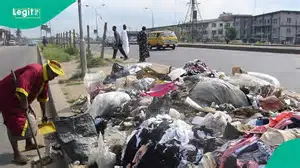
From the Oshodi–Apapa Expressway corridor, particularly around the Tin Can Island Port axis, to parts of the Mainland and Lagos Island, the situation presents a familiar but worrying picture: heaps of refuse along roadsides, waste materials trapped in drainage channels, and floodwaters carrying discarded materials back into streets and residential areas.
Findings by the African Writers Centre (AWC) during an assessment tour across different parts of Lagos revealed that the problem is not limited to a particular location but appears widespread across the metropolis.
The rainy season has complicated waste disposal operations, with some disposal locations reportedly experiencing flooding and difficult access conditions. There have also been unconfirmed reports surrounding the temporary suspension of activities at the Ojota dumpsite following alleged developments concerning the facility, although official confirmation on such claims remains necessary.
Beyond the challenges at dumpsites, blocked drainage systems have become a major concern. Several drainage channels — including minor gutters and major collector drains — have become filled with refuse, either washed in by floodwaters or deliberately dumped by some residents and businesses.
The consequence is a cycle that repeats itself: waste is removed from drainage channels during sanitation interventions, temporarily placed by the roadside, and before proper evacuation occurs, another rainfall pushes the same waste back into the drainage system, worsening flooding and environmental hazards.
During the AWC assessment along the Oshodi–Apapa Expressway, a local government official who spoke on the ongoing situation assured that intervention efforts were being intensified to address waste accumulation and improve environmental conditions around the area.
However, residents expressed concern over the irregular activities of Private Sector Participation (PSP) waste disposal operators, with some claiming that waste collection trucks no longer arrive as regularly as expected. Some residents reported having accumulated waste within their homes due to delays in evacuation.
A similar situation was observed in areas such as Maryland and other parts of the Mainland, where refuse removed from drainage channels was seen along roadsides, creating the possibility of being washed back into gutters during subsequent rainfall.
While public criticism has often focused on government responsibility, stakeholders acknowledge that the challenge is a combination of factors — including inadequate waste disposal habits by some citizens, pressure on existing waste infrastructure, extreme weather conditions, and the need for more efficient waste management planning.
Environmental experts have repeatedly emphasised that Lagos, being a coastal megacity with a large population, requires a proactive waste management strategy that anticipates seasonal challenges rather than relying mainly on emergency responses after problems have escalated.
The Lagos State Government and relevant agencies must continue to intensify interventions, improve waste evacuation systems, strengthen monitoring of PSP operators, expand recycling initiatives, and ensure that drainage channels remain free before and during the rainy season.
However, residents also have a critical role to play. Dumping refuse into drainage channels not only creates environmental problems but directly contributes to flooding, public health risks, and destruction of infrastructure.
The Lagos waste challenge is complicated, but not impossible to solve. With proper planning, stronger enforcement, improved infrastructure, and responsible citizen participation, the state can overcome the recurring sanitation crisis.
The lesson from the current situation is clear: waste management must move from a reactionary approach to a proactive, year-round strategy.
#LagosWasteCrisis
#EnvironmentalSanitation
#FloodPrevention
#LagosState
#SustainableCities


