


AWC CURRENT AFFAIRS DESK
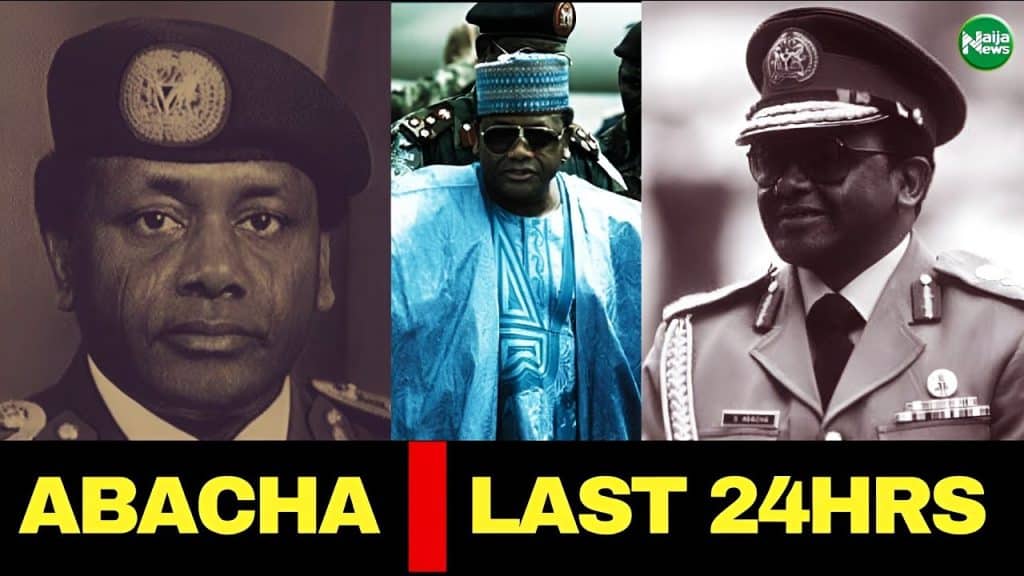
Abuja — Nearly three decades after the sudden death of Nigeria’s former military Head of State, General Sani Abacha, a retired senior security officer has reopened discussions surrounding one of the country’s most controversial political mysteries, offering a new account of what allegedly happened in the final hours of the former dictator.
In a report published by The Nation Newspaper on July 21, 2026, titled “DSS @40: My Journey Behind the Shield — The Untold Story,” the newspaper quoted retired Assistant Director of the Department of State Services (DSS), Dennis Amachree, as revealing details contained in his newly released 348-page book.
According to The Nation, Amachree claimed that the woman who was with General Abacha at the time of his death told security investigators: “I did not kill him, he died on top of me.”
The retired intelligence officer said the statement was made during an interrogation after he was directed to locate and question the pharmacist who was allegedly the last person with Abacha before his death.
New Account Challenges Decades of Speculation
General Sani Abacha, who ruled Nigeria from November 1993 until his death on June 8, 1998, died suddenly at the age of 54 inside the Presidential Villa, Abuja.
His death generated widespread speculation, with various theories emerging over the years, including claims of poisoning, foreign involvement, internal political plots and medical complications.
However, Amachree, who was serving as Assistant Director of Operations and Intelligence at the Lagos State SSS Command at the time, said many of those narratives were based on speculation rather than verified intelligence.
In his account, he stated that Abacha died at approximately 4:05am on June 8, 1998, while in an intimate encounter with a young pharmacist who had accompanied her sister, a known associate of the late Head of State.
The Alleged Final Hours
According to the account reproduced by The Nation, Amachree said the woman arrived at the Aso Rock Guest House around 2:40am after General Abacha had received visitors earlier in the night.
He claimed that after her sister left, the pharmacist remained with the Head of State, and during an intimate moment, she noticed that Abacha had stopped responding.
The retired DSS officer said the woman became frightened, informed security personnel that “Oga” needed a vehicle, and left for Lagos before the news of Abacha’s death became public.
Amachree said security officials later traced her to Lagos, where she was brought in for questioning.
He stated:
“My team located and brought her to my office. I interrogated her myself. The first thing she said to me was: ‘I did not kill him, he died on top of me.’”
The retired intelligence officer said after hearing her explanation, he reported back to his superiors and arrangements were made for her return to Abuja.
Rejecting Other Narratives
In his book, Amachree reportedly examined several accounts surrounding Abacha’s death, including claims by journalists, politicians, military officers and public commentators.
He dismissed suggestions that the late Head of State was poisoned, including claims involving foreign intelligence agencies, a poisoned handshake and other conspiracy theories.
He also questioned the account of Major Hamza Al-Mustapha, Abacha’s Chief Security Officer, who had maintained that the General’s health deteriorated after a handshake with a member of the delegation of the Palestine Liberation Organisation (PLO) leader, Yasser Arafat.
Amachree argued that Al-Mustapha’s version left unanswered questions about the period between Abacha’s final visitors leaving and the discovery of his medical emergency.
Abacha’s Controversial Legacy
Beyond the mystery surrounding his death, the book also revisits General Abacha’s five-year rule, which remains one of the most debated periods in Nigeria’s political history.
Amachree acknowledged that Abacha’s administration was widely criticised for authoritarianism, restrictions on civil liberties, political repression and allegations of human rights abuses.
During his tenure, several pro-democracy activists, journalists and opposition figures were detained, while Nigeria faced international condemnation.
The late military ruler also attracted controversy over allegations of plans to transform from military leader into a civilian president after a transition programme in which several political groups reportedly endorsed his candidacy.
The late former Governor of Oyo State, Chief Bola Ige, famously described the five political parties that supported Abacha’s transition plans as “the five fingers of a leprous hand.”
A Debate Over History and Truth
Amachree said his motivation for writing the book was to preserve historical accuracy and provide what he described as an insider’s perspective on events that shaped Nigeria’s political journey.
He argued that misinformation surrounding major national events has contributed to public distrust and urged Nigerians to rely on verified facts rather than rumours.
The revelation is expected to reignite public debate over the circumstances surrounding Abacha’s death and the role of intelligence agencies in documenting Nigeria’s political history.
While Amachree’s account provides a new perspective, questions surrounding General Abacha’s final moments remain part of Nigeria’s complex political history, with the latest claims likely to attract further discussion among historians, security experts and political observers.
Source: The Nation Newspaper, July 21, 2026 — “DSS @40: My Journey Behind the Shield — The Untold Story.”
#SaniAbacha
#NigeriaHistory
#DSS40
#PoliticalHistory
#UntoldStories


