


…AGEING WITH DIGNITY: NIGERIA MUST BUILD A HEALTH SYSTEM THAT CARES FOR ITS OLDER CITIZENS — WHO
AWC HEALTHCARE DESK, SEPTEMBER 2026
The World Health Organization (WHO) in Nigeria has renewed its commitment to strengthening healthcare and social support systems for older persons, stressing that Nigerians deserve to live longer, healthier and more dignified lives.
The commitment was reaffirmed as WHO Nigeria Country Representative, Dr Pavel Ursu, received the Director-General of the National Senior Citizens Centre (NSCC), Hon. Omobolanle Akinyemi Obe, as both institutions explored stronger collaboration to improve access to quality and equitable care for older people across the country.
With Nigeria’s population ageing, the challenge is no longer simply about helping citizens live longer. It is increasingly about ensuring that additional years of life are accompanied by good health, independence, dignity and meaningful participation in society.
WHO noted that older women and men, particularly those aged 60 years and above in rural and underserved communities, often face significant barriers to accessing age-friendly health and social services.
TAKING ELDERLY CARE TO PRIMARY HEALTHCARE
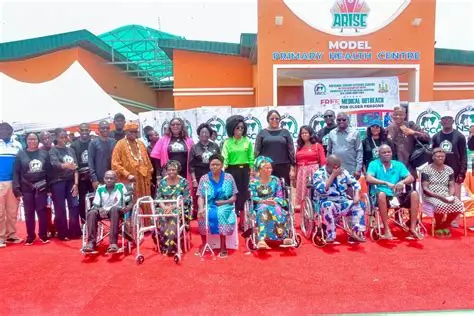
One of the key areas of focus is the integration of care for older persons into Nigeria’s Primary Health Care system.
Through the Integrated Care for Older People (ICOPE) approach, health facilities can provide a more comprehensive range of services, including preventive care, health promotion, chronic disease management and rehabilitation.
This approach is important because ageing often comes with multiple and interconnected health and social needs.
Rather than treating each condition separately, an integrated system can help health workers identify problems earlier and provide continuous care closer to where older people live.
TRAINING HEALTH WORKERS
WHO is also supporting the training and capacity-building of healthcare workers to enable them to respond more effectively to the specific needs of older persons.
This is particularly important at the primary healthcare level, where many elderly Nigerians first seek medical attention.
A health system cannot be genuinely age-friendly if healthcare workers lack the knowledge, skills and resources required to care for an ageing population.
BEYOND MEDICINE
The WHO intervention also recognises that healthy ageing is not exclusively a medical issue.
Many vulnerable older persons require social protection, community support and assistance with everyday needs.
Consequently, WHO is working with government and partners to strengthen community-based systems capable of supporting older people who may otherwise face isolation, poverty, neglect or difficulty accessing essential services.
This broader approach is critical because living longer without social protection or dignity cannot be described as healthy ageing.
NIGERIA PREPARING FOR AN AGEING POPULATION
The collaboration between WHO and the National Senior Citizens Centre also highlights the need for Nigeria to prepare deliberately for demographic change.
As more Nigerians live into older age, the country will require stronger policies covering healthcare, social protection, housing, mobility, community participation and economic inclusion.
WHO is therefore supporting national guidance and policies designed to help Nigeria prepare for an increasingly ageing population.
The message is clear: ageing should be planned for, not treated as an emergency when it arrives.
A NATIONAL RESPONSIBILITY
The African Writers Centre believes that the treatment of older citizens is an important measure of the values of any society.
Nigeria’s elderly population includes parents, teachers, civil servants, entrepreneurs, farmers, professionals, soldiers, community leaders and workers who contributed to building the country.
They should not be regarded simply as dependants or burdens.
They remain citizens with rights, experience, knowledge and the capacity to contribute to their families and communities when given the appropriate support.
The collaboration involving WHO, the National Senior Citizens Centre, government agencies and development partners therefore deserves attention and sustained support.
WHO said it remains committed to working with government at national and subnational levels, the NSCC and partners including Save the Children and UNFPA to ensure that no older person is left behind.
For Nigeria, the objective should be straightforward:
If Nigerians are living longer, Nigeria must also make sure they are living better.
Healthy ageing should mean more than surviving into old age. It should mean reaching old age with dignity, independence, fulfilment, access to healthcare and the opportunity to remain productive members of society.
That is the Nigeria that its older citizens deserve.
#HealthyAgeing #AgeingWithDignity #SeniorCitizens #HealthcareNigeria #AWC


