


- Amah Alphonsus Amaonye, August 2026
- LAGOS — The familiar nightmare of Apapa traffic congestion appears to be returning, and this time the warning signs should not be ignored.
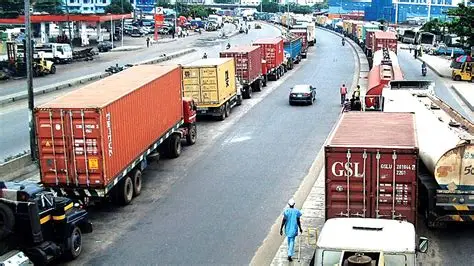
Fresh observations around the Apapa port environment indicate a growing buildup of articulated trucks, including trucks conveying export-laden containers and empty containers towards port facilities. If the situation is allowed to escalate unchecked, the congestion could once again spill out of the port environment and overwhelm the major road corridors connecting Apapa with Mile 2, Oshodi and other parts of Lagos.
This is precisely the stage at which government intervention is most effective — before a port-access problem becomes a metropolitan transportation crisis.
Recent reports already confirm a resurgence of gridlock around the Apapa–Mile 2 corridor. Hundreds of trucks have been reported occupying major sections of the road, while motorists and businesses have suffered prolonged delays.
The situation is particularly concerning because the problem is not simply about the number of trucks on the road. It is about how cargo enters the port ecosystem, how quickly terminals receive and process trucks, how empty containers are evacuated, and how export containers are handled and moved to vessels.
There are suspicions that some operators in the maritime and shipping ecosystem are benefitting from the truck gridlock. Apart from wastage in diesel and man hours to truck operators, there are direct losses of container deposits to the importers. It has been estimated that the local economy loses trillions of naira annually to foreign shipping lines from container deposits.
The delay in returning empty containers is giving more impetus to this capital flight, as Nigerian importers continue to pay between N200,000 and 600,000 in containers deposits depending on the TUES and cargo destination. The question is: Is there a racket aimed at increasing huge moneys accruing to foreign shipping companies from container deposits by delaying the return of empty containers?
In May, the Nigerian Ports Authority reportedly directed shipping lines to evacuate empty and export-bound containers from Apapa, warning that the buildup could threaten port operations and trade flows.
More recently, APM Terminals Apapa explained that a sharp increase in import cargo volumes had caused shipping lines to prioritise incoming laden containers over the evacuation of empty containers, contributing to pressure on container-handling capacity.
These developments suggest that the present warning deserves serious attention.
DON’T WAIT FOR THE EXPRESSWAY TO LOCK UP
The danger is that a relatively contained port-access congestion can quickly become a multilateral transportation problem.
Once trucks begin occupying more road space around Apapa, the effects spread outward — to Mile 2, the Oshodi-Apapa Expressway, industrial areas, commercial districts and eventually other traffic corridors.
The consequences are enormous: wasted productive hours, higher logistics costs, delayed cargo evacuation, increased fuel consumption, reduced business efficiency, environmental pollution and additional pressure on already stressed urban infrastructure.
Nigeria simply cannot afford to have one of its most important maritime gateways repeatedly paralysed by preventable traffic failures.
The Nigerian Ports Authority has demonstrated that intervention is possible. In August, the Authority said its task force had removed more than 1,500 illegally parked trucks and unauthorised checkpoints from Apapa port corridors and had expanded barge operations to move more than 30 per cent of containerised cargo through inland waterways.
But enforcement alone will not permanently solve the problem.
Government agencies, terminal operators, shipping lines, truck operators, the Nigerian Shippers’ Council, Lagos State traffic authorities and other stakeholders need to identify exactly where the current buildup is originating and act before the queue becomes unmanageable.
The key question should be simple:
Are trucks being released into the port corridor faster than terminals can receive, process and evacuate them?
If the answer is yes, truck dispatch must immediately be synchronised with actual terminal capacity.
There must also be tighter coordination of empty-container returns, export-container movements, terminal receiving schedules and truck call-up arrangements.
Nigeria’s port system cannot function efficiently if trucks are allowed to accumulate faster than the port ecosystem can process them.
A SEAMLESS PORT CORRIDOR IS AN ECONOMIC NECESSITY
A functioning transport system is not merely a convenience. It is a fundamental component of economic development.
Every hour a truck spends unnecessarily in traffic represents additional logistics costs that eventually find their way into the price of goods.
Every container delayed at the port represents potential losses to importers, exporters, manufacturers, shipping companies and government revenue.
And every hour commuters spend trapped behind articulated vehicles represents lost economic productivity.
Apapa should therefore be treated as an economic emergency corridor, not merely another traffic hotspot.
The warning signs are visible.
The government should not wait until the Apapa internal roads are completely overwhelmed, the congestion reaches the expressway and the entire transport network begins to interact with the resulting bottlenecks.
Act now — while the problem is still manageable.
#Apapa #PortCongestion #LagosTraffic #NigerianPorts #Logistics


