


AWC FOREIGN DESK, SEPTEMBER 2026
GYIRONG, Tibet — A catastrophic landslide and wall of floodwater have erased Gyirong Port, one of the key gateways between China and Nepal.
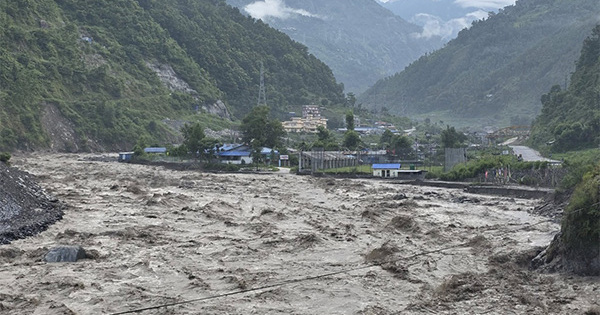
The scale of destruction along the China–Nepal border has become clearer as images emerge from Gyirong Port, a once-busy border and trading gateway that was almost completely obliterated by the catastrophic flooding of August 26.
What remains of the facility is described as a landscape of rocks, mud and debris, with little visible evidence of the busy checkpoint and infrastructure that previously occupied the site. Reuters reporters who visited the restricted area found the five-storey customs building destroyed, with only fragments of structures remaining.
The disaster began when a massive ice-and-rock avalanche/glacial collapse triggered an extraordinary surge of water and debris through the Himalayan valleys. The resulting flood devastated communities on both sides of the China–Nepal border before sweeping downstream into Nepal. Scientific assessments have identified the event as a major mudslide disaster originating in the region rather than simply an earthquake-triggered flood.
Gyirong Port was particularly important because it had become a major trade and pilgrimage gateway between China and Nepal. The destruction has therefore gone beyond the loss of a border facility: it has disrupted transportation, commerce, tourism and religious travel between the two countries.
The images from the site offer a sobering illustration of the extraordinary force of the disaster. Roads, buildings, power infrastructure and other facilities were swept away, leaving rescuers working through unstable terrain and enormous quantities of mud and debris.
The destruction at Gyirong is also part of a much larger humanitarian catastrophe. The August 26 floods and landslides have killed more than 1,300 people according to the latest Reuters reporting, while thousands remain missing on both sides of the border. Rescue teams continue searching difficult terrain for survivors and victims.
The disaster has also raised broader questions about disaster preparedness, early-warning systems and infrastructure development in the rapidly changing Himalayan environment. Experts have warned that glacier instability and other climate-related risks are becoming increasingly important considerations for communities and infrastructure located downstream of vulnerable mountain regions.
For the people who depended on Gyirong Port, however, the immediate concern is more basic: survival, recovery and rebuilding.
A border crossing that once symbolised movement and connection between two countries now stands as one of the most powerful images of nature’s destructive force.
In a matter of minutes, a gateway that took years to build was swept away.
#NepalFloods #GyirongPort #ChinaNepal #HimalayanDisaster #ClimateRisk


