


AWC MDA Desk
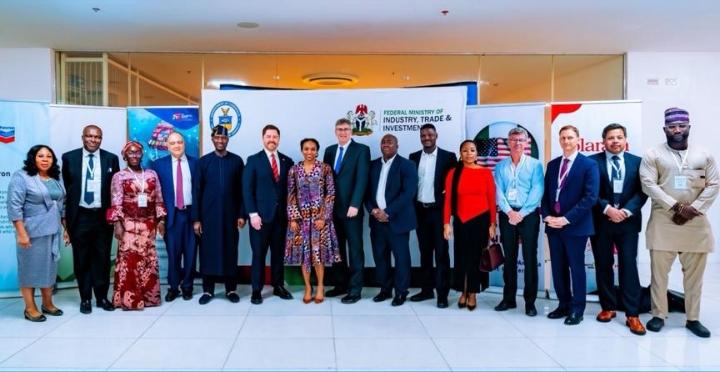
Nigeria yesterday Thursday hosted the 2nd Ministerial Nigeria–United States Commercial and Investment Partnership (CIP) Meeting in Abuja, a high-level engagement that signals renewed momentum in the country’s drive to attract investment, expand trade, and deliver measurable economic outcomes for citizens.
Chaired by the Minister of Industry, Trade and Investment, Dr. Jumoke Oduwole, the meeting brought together senior government officials and private sector leaders from both countries, focusing on sectors with the strongest impact on jobs, productivity, and economic diversification—agriculture, manufacturing, and digital infrastructure.
From a public performance perspective, the CIP framework is increasingly viewed as a results-oriented platform rather than a ceremonial dialogue. It aligns with Nigeria’s medium-term economic targets, particularly the administration’s ambition to scale the economy toward $1 trillion in output, while improving value-chain efficiency and export competitiveness.
The United States delegation included Deputy Assistant Secretary Bradley McKinney, Chargé d’Affaires Keith Heffern, Consul General Rick Swart, Jason Hafemeister, and Heather Lanigan, underscoring Washington’s continued strategic interest in Nigeria as Africa’s largest economy and a key commercial partner.
Speaking at the meeting, Dr. Oduwole said the partnership goes beyond diplomacy, serving as a performance lever to unlock private capital, strengthen industrial capacity, and deepen technology-driven growth. She noted that sustained collaboration with the U.S. would help Nigeria address structural bottlenecks, boost local production, and improve trade balances.
Analysts say the focus on agriculture and manufacturing directly addresses Nigeria’s unemployment and inflation pressures, while discussions on digital infrastructure point to long-term productivity gains and competitiveness in the global economy.
For the public, the success of the CIP will ultimately be measured by clear indices: jobs created, investments secured, export growth, and technology transfer. As expectations rise, stakeholders will be watching closely to see how quickly policy conversations translate into factories, farms, data centres, and tangible improvements in livelihoods.
The 2nd CIP meeting marks another step in repositioning Nigeria–U.S. relations from goodwill exchanges to deliverables-driven economic partnership, with citizens increasingly demanding outcomes—not promises.


