


AWC Foreign Affairs Desk
Tehran / Gulf Region
The Islamic Republic of Iran has announced a renewed blockade of the strategically vital Strait of Hormuz, less than 24 hours after signaling a conditional reopening of the corridor during an ongoing ceasefire period linked to hostilities involving Israel and the United States.
Iranian authorities stated that the decision to resume the blockade is in response to what they described as continued restrictions by the United States on maritime transportation to Iranian ports. Officials maintained that access to the waterway would remain constrained until such measures are lifted.
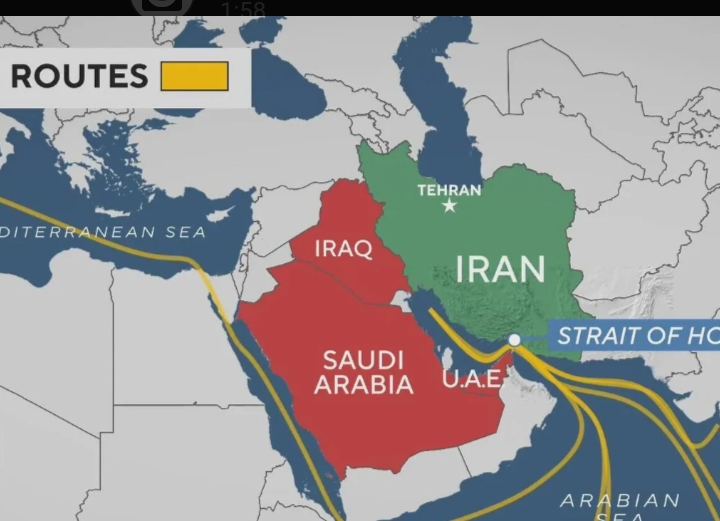
The Strait of Hormuz, a narrow but critical maritime corridor connecting the Persian Gulf to global shipping routes, handles an estimated 20 percent of the world’s oil tanker traffic, making any disruption a significant concern for global energy markets.
The rapid shift, from a conditional reopening announcement to a renewed blockade, has raised questions among analysts about Iran’s strategic intentions. Some observers interpret the earlier reopening signal as a tactical move aimed at reinforcing Tehran’s leverage over the waterway, rather than a full de-escalation.
According to this view, the temporary opening gesture may have been designed to demonstrate control while sending a broader geopolitical message regarding Iran’s ability to influence global energy flows.
Iran’s latest position ties the status of the Strait directly to U.S. policies affecting its maritime trade. Officials argue that restricting access to Iranian ports undermines economic activity and violates principles of free navigation, prompting retaliatory measures.
While Washington has not formally responded to the latest announcement, tensions between both countries have remained elevated amid broader regional security concerns.
Experts warn that any prolonged disruption in the Strait of Hormuz could have far-reaching economic consequences, including:
Further rising of global oil prices
Increased supply chain disruptions
Higher shipping insurance costs
Heightened geopolitical instability in the Gulf region
Energy-importing countries, particularly in Asia and Europe, are expected to monitor developments closely due to their reliance on crude oil shipments passing through the strait.
The development also casts doubt on the durability of the reported ceasefire framework involving Iran, Israel, and the United States, with the latest actions suggesting that underlying tensions remain unresolved.
Security analysts caution that the situation remains fluid, with the potential for further escalation or diplomatic intervention depending on how key stakeholders respond in the coming days.
The Strait of Hormuz continues to serve as one of the world’s most critical geopolitical pressure points. Iran’s latest move underscores its willingness to leverage control of the corridor as part of broader strategic negotiations.
As global attention turns to the Gulf, the unfolding situation is expected to test diplomatic channels and international efforts aimed at maintaining stability in one of the world’s most sensitive energy transit routes.


