


AWC Education Desk
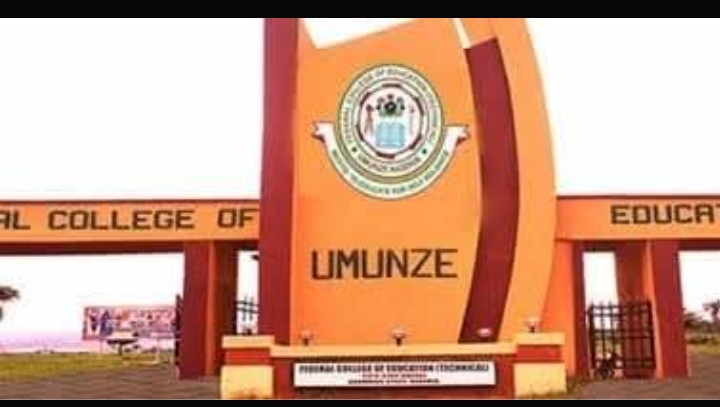
As it is today, the story of Umunze cannot be complete without mentioning the Federal College of Education (Technical), FCET, Umunze, an institution of higher learning that has groomed many since it’s inception.
Umunze is not merely a dot on the map of Anambra State; it is a town etched deeply into Nigeria’s political, cultural and intellectual history. Ancient, strategic and proudly urban, Umunze stands today as a compelling case study of how heritage, geography and education can—and must—work together for national development.
As the headquarters of Orumba South Local Government Area, Umunze has long punched above its weight. It is the hometown of one of Nigeria’s foremost First Republic nationalists and statesmen, HRH Igwe M. N. Ugochukwu (Abilikete I of Umunze)—the revered Igwe of Orumba and Eze Ohazulume I of Igboland.
The town has also produced a global icon of cultural entertainment in the person of Chief Festus Nwankwo, Ojimgba I, popularly known worldwide with the name of his art, Nkpokiti.
There are other eminent public servants, including a former Deputy Governor of Anambra State, Engr Emeka Sibeudu, who is presently the Secretary-General of Ohanaeze Ndigbo worldwide, alongside a galaxy of technocrats, professionals and business moguls making waves across Nigeria and beyond.
Today’s Umunze is a bustling commercial hub. With at least four major commercial banks, some microfinance institutions, a highly active daily market—Nkwo Umunze—and one of the busiest motor parks in the zone, the town thrives on intense public and private sector economic activity. Its streets hum with trade, transport and enterprise, affirming its status as one of the most populated and commercially vibrant cities in Anambra State.
Geographically, Umunze enjoys a rare advantage. Strategically positioned for seamless access to all the states of South-East Nigeria, it naturally lends itself to regional connectivity and integration.
This singular advantage explains why the siting of the Federal College of Education (Technical), Umunze (FCET Umunze) is not just a blessing to the host community, but a strategic national asset for Southern Nigeria and the Federal Republic at large.
Yet, with opportunity comes responsibility.
For a town of Umunze’s stature—and an institution of FCET’s national mandate—survival must give way to growth. The college was established to serve a broad and diverse population, and that mission can only be fulfilled through deliberate investment, strong leadership and modern infrastructure. As the tenure of the current Provost, Prof. Theresa Okoli, draws to a close, history will record both efforts made and opportunities missed. While she may have worked within the limits of circumstance, the present condition of the institution underscores an urgent need for renewal.
FCET Umunze requires a Provost with deep institutional experience, administrative capacity and a clear understanding of the college’s technical and national role. Since it’s inception, an indigene of Umunze has not occupied the position of provost in the school. If the school is decaying, as observers have averred, it might be a good idea if the government could enthrone a qualified and experienced indigene of Umunze to offer the service of resuscitating the institution.
More critically, the campus needs an immediate facelift—modern classrooms, rehabilitated hostels, functional workshops and a learning environment befitting a federal tertiary institution. Allowing vital academic spaces to be reclaimed by overgrown bushes is not merely neglect; it is a setback that must be decisively reversed.
These immediate attention and steps would support other strategic push that only an experienced and passionate provost would evolve to stimulate student population growth in the school.
Concerns about insecurity in the town, often exaggerated, should not become an excuse for stagnation. While Umunze, like many Nigerian communities, has felt the ripple effects of regional security challenges—particularly due to its proximity to borders with Imo and Abia States—educational institutions traditionally enjoy layered internal security mechanisms that limit escalation. The narrative of insecurity must therefore be balanced with facts and proactive solutions, not fear. It shouldn’t be an excuse for non performance.
Umunze remains a jewel—resilient, resourceful and richly endowed with human capital. What it now demands is coordinated federal and state interventions in security, intentional development:, renewed institutional leadership, and strategic investment by its illustrious sons and daughters at home and in the diaspora.
Sustained growth and transformation of FCET Umunze is inseparable from the progress of Umunze itself. To strengthen one is to uplift the other—and in doing so, contribute meaningfully to the educational, economic and technological future of Nigeria.
A stitch in time saves nine